
gemba
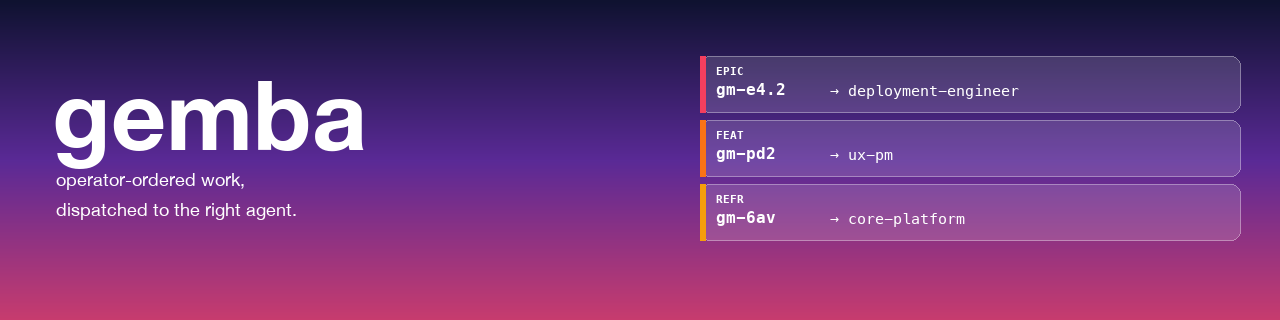
gemba







⭐ Star us on GitHub — it helps people find this project and tells us we’re solving a real problem.


In lean manufacturing, gemba (/ˈɡem.bə/ 現場) is “the actual place” — the factory floor, where real work happens. A gemba walk is when leadership observes the work directly, not through reports, and leaves actionable feedback as they go. Gemba is built around that metaphor.
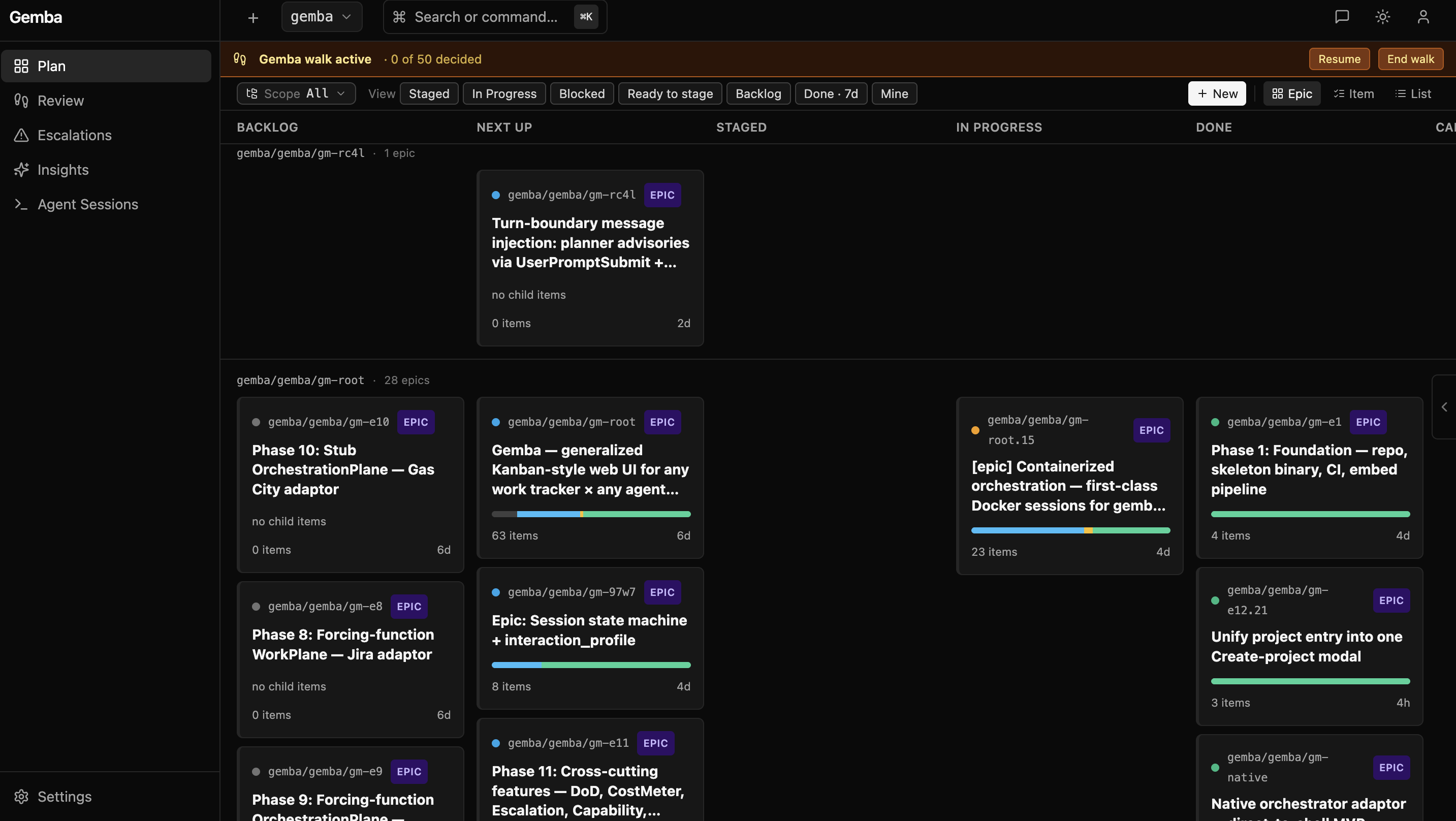
Gemba features Kanban like planning, execution, and management of complex vibe coding projects in a single pane of glass. Organize, review, and dispatch large, parallel batches of work and monitor real progress towards milestones, all with built-in coaching and drift detection. Start a new project with a guided conversation or import your existing work — see Getting Started for a quick start.
Table of Contents
- 🚀 About
- 🧱 Architecture
- 🎯 Two-Axis Work Planning and Dispatch
- Spec-driven development (ASDD)
- 🚦 Status
- ✨ What’s New
- 📸 Screenshots
- 📦 Project Layout
- 🏁 Getting Started
- 🛠️ Development
- 📚 Documentation
- 🤝 Feedback and Contributions
- 📜 License
🚀 About
Gemba was born out of frustration with the current state of vibe coding.
Massively parallel, “headless” agentic software development was
technically possible but it was cumbersome. Before Gemba, a single app
to manage the process using concepts and terms familiar to developers
did not exist - concepts like milestones, epics, and Kanban planning to
tie them together.
Systems like Beads made it possible for agentic pipelines to discover,
claim and report work progress but these systems were not functionally
integrated with execution — ordering, dispatching, and monitoring
the work.
This left developers to face several obstacles in projects of any appreciable scale:
- Planning is disconnected from execution — issues in Jira, Beads, or Todo.txt, agents in a terminal, output in git.
- Priority is invisible. The dep graph says what can run; nothing says what should run next.
- Expertise is siloed — a side-of-the-desk project needs product